The Essentials of Building Operations Management Solutions
“We require from buildings two kinds of goodness: first, the doing their practical duty well; then that they be graceful and pleasing in doing it.” – John Ruskin
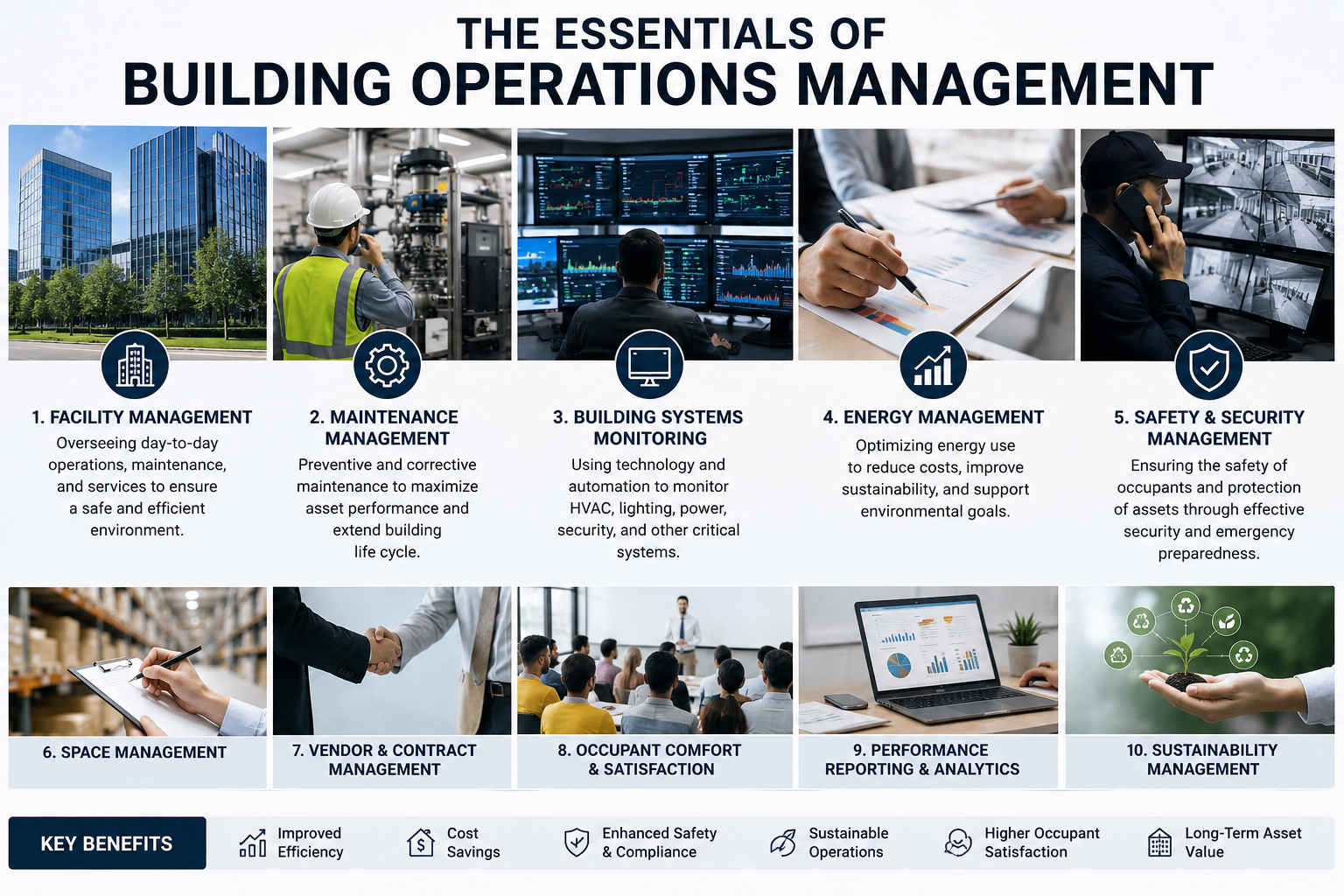
In previous blogs, I had spoken of the importance of facilities management for business enterprises and some of the key features of Facilities Management. In this article, the focus shifts to Building Operations Management (BOM) and how it can benefit organizations in multiple ways.
In a nutshell, Building Operations Management solutions are useful for the smooth and efficient functioning of industrial and commercial buildings while maintaining a safe and comfortable environment for occupants.
As a centralized system, Building Operations Management monitors and controls environmental conditions and building systems including electrical, mechanical, lighting, security, and emergency systems. Efficient solutions help reduce operational costs through improved energy efficiency and lower maintenance expenses.
Why do we need Building Operations Management?
Building Operations Management solutions provide centralized automation systems that control heating, lighting, ventilation, energy consumption, air conditioning, security, and other critical building functions.
The primary purpose of implementing these solutions is to simplify building management, reduce operational challenges, and improve maintenance efficiency.
1. Better Energy Management and Reduced Costs
One of the biggest advantages of Building Operations Management solutions is improved energy efficiency. Heating, cooling, and lighting systems can be controlled and adjusted according to occupancy levels and operational requirements.
Automated scheduling ensures lower energy consumption during periods of low usage. Organizations can significantly reduce utility expenses through intelligent energy management.
2. Improved Security
Building Operations Management systems can be customized to meet specific security requirements and provide controlled access to authorized personnel.
Integrated alarms, CCTV monitoring, security lighting, and intelligent event filtering create a comprehensive security environment while reducing false alarms and improving response times.
3. Makes Building Maintenance Simpler
Building managers can identify operational issues early through continuous monitoring. This proactive approach reduces maintenance costs and prevents major failures.
Data collected from different building zones allows managers to analyze performance, identify trends, and take corrective action before issues escalate.
Remote access capabilities enable operators to review building information securely from virtually any location.
Key Areas Addressed Through Building Operations Management
1. Lighting Automation Systems
Modern lighting systems use occupancy sensors, scheduling controls, and automation to switch lights on and off based on usage patterns.
These systems can centrally manage interior spaces, walkways, parking areas, and other facility locations while supporting overall security objectives.
2. Heating, Ventilation and Air Conditioning (HVAC)
HVAC systems account for a significant portion of building energy usage. Building Operations Management enables intelligent control of HVAC settings, reducing waste and improving occupant comfort.
Optimized HVAC operations help lower electricity consumption and operational costs.
3. Security Systems
Security solutions include access control, video surveillance, intrusion detection, and centralized monitoring capabilities.
Real-time monitoring and analytics assist in identifying suspicious activities and protecting security-sensitive areas.
4. Emergency Systems
During emergencies such as fires, intelligent building systems help prevent loss of life and property damage by coordinating alarms, access control, smoke management, and emergency response actions.
These capabilities enable faster response times and improved occupant safety.
5. Data Diagnostics Systems
A key feature of modern Building Operations Management is the ability to collect, analyze, and interpret operational data for better decision-making.
Facility managers gain actionable insights into building performance, helping them improve efficiency and take corrective actions when required.
Conclusion
Facility managers continuously strive to reduce energy consumption, improve operational efficiency, minimize waste, and provide a safe and comfortable workplace.
Building Operations Management solutions simplify these challenges through centralized control, intelligent automation, and actionable insights that support long-term operational excellence.
Blogs
Why Indian Corporates Must Start Paying Attention To Space Management

The Key Role Of The Mobile In Facilities Management Today

The Eye Of The Tiger – Team Travels In Tadoba

How An Effective Facilities Management Solution Can Help Make Green Buildings A Reality

The Big Leap From Facilities Management To Integrated Workplace Management
Case Studies

GCAA, Abu Dhabi, UAE

Cranedge India Pvt. Ltd.

EMCO, Qatar